Restaurant Finance · 2026-09-21 · 7 min
Sub-Recipe and Batch Costing for Restaurants: Cost Sauces Once, Price Every Dish Right
A sub-recipe is any preparation you make in a batch and use across several dishes: sauces, dressings, stocks, marinades, spice blends, doughs, salsas and desserts components. Costing it as a sub-recipe means pricing the batch, measuring the yield, and carrying a single cost per ounce or per portion into every dish that uses it. Done once, it removes the largest source of drift in scratch-kitchen plate costs, because a sauce that quietly moved from $0.55 to $0.80 a portion takes a dollar of contribution off every dish it touches.
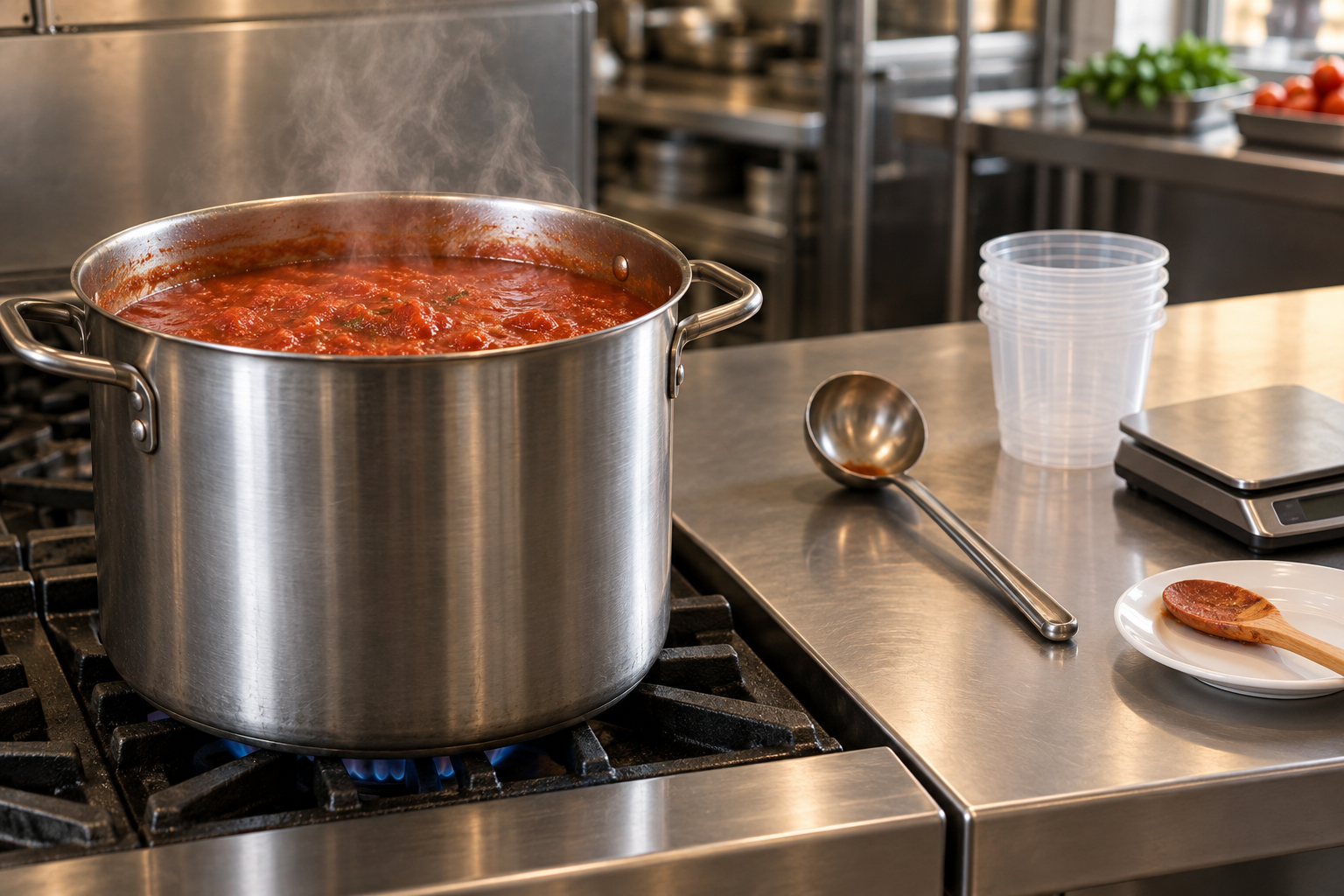
Why batch components break plate costs
When a dish is costed ingredient by ingredient, two errors repeat:
Both errors compound across the menu. A single sauce used in six dishes distorts six contribution numbers at once, and those numbers drive pricing, portion and menu decisions.
- The batch is costed once and then frozen in time. Flour, oil, dairy and tomato prices move; the sauce cost in the recipe file does not.
- Nobody knows what a batch actually yields. Reduction, evaporation, straining and chilling change the volume, so a recipe that assumes 4 quarts from a pot that yields 3.4 quarts under-costs every portion by roughly 15%.
Building a sub-recipe cost card
A usable card has five fields, in this order:
1. Ingredients with quantities and current invoice prices. Use purchase units you actually buy in, then convert once to a costing unit per line. 2. Batch cost. The total cost of everything that goes into the pot, including small items like herbs and spices. 3. Usable batch yield, measured. Weigh or measure the finished, cooled batch in the unit you portion from, and record it. Do not use the sum of the inputs. 4. Cost per unit. Batch cost divided by usable yield, expressed in the unit your line uses: per fluid ounce, per gram, per portion. 5. Portion size and cost per portion. What the recipe calls for, multiplied by the cost per unit, plus the cost of any components added at service.
The formula is short: cost per portion = batch cost ÷ usable yield × portion size.
Worked example: a marinara that costs $0.69 a portion
The numbers below are illustrative, and the point is the method rather than the exact prices.
| Ingredient | Quantity | Cost |
|---|---|---|
| Canned tomatoes | 2 × #10 cans | $11.40 |
| Olive oil | 6 fl oz | $1.32 |
| Onion and garlic | 1.5 lb combined | $2.05 |
| Herbs, salt, sugar | as needed | $0.85 |
| Wine, reduced | 4 fl oz | $1.55 |
| Tomato paste | 6 oz | $1.45 |
| Batch cost | $18.62 |
Cook, cool and measure the finished batch: 108 fl oz usable, not the 120 fl oz the input volume suggests. That gives $18.62 ÷ 108 = $0.172 per fluid ounce.
Now carry it across the menu:
If a component price jumps — say canned tomatoes rise 18% — the batch cost moves to roughly $20.67, the cost per ounce to $0.191, and the pasta portion to $0.76. The dish cost is now off by $0.07 from what the file says, which is small per plate but not small across 300 plates a week. Re-costing the batch updates every dish at once.
- Pasta entrée, 4 fl oz: $0.69
- Flatbread, 2 fl oz: $0.34
- Baked pasta portion, 6 fl oz: $1.03
- Side of sauce, 3 fl oz: $0.52
Handle yield honestly
Reduction and straining are where sub-recipe costs go wrong most often:
The fix is to measure the finished yield every time you change the recipe, and to write the measured yield on the card in the unit you portion from. A scale in the walk-in and a permanent marker are enough.
- A stock reduced by a third has a cost per quart that is 50% higher than the un-reduced volume suggests.
- A vinaigrette that separates and is re-emulsified loses nothing, but one that is strained loses a few percent.
- A chili or braise portioned after cooking will under-deliver on portion count if the recipe assumes raw weight.
Keep the cards current
A sub-recipe card is only as good as its last update. A simple maintenance routine is enough:
That dish list is the part most kitchens skip. Without it, a corrected sauce cost never reaches the recipes, and the plate costs stay wrong.
- Update the card when any component moves more than 2–3% in price, and at minimum once a month.
- Re-measure the yield whenever the recipe, pot size or supplier changes.
- Keep units consistent: cost in ounces, portion in ounces, never mix fluid and weight without converting.
- Version the card with a date so a bad batch can be traced back to a specific recipe revision.
- List every dish that uses the component on the back of the card, so an update triggers a re-cost.
Where sub-recipes touch menu decisions
Once components are costed properly, three decisions get easier:
If you want to fix the ingredient side of the same problem, the food cost formula shows how theoretical and actual costs should reconcile each week.
- Pricing: a dish that looked healthy may be thin once its sauce, dressing and garnish are carried at current cost. Run the corrected number through the plate cost calculator before adjusting the menu.
- Batching: if a component's cost per portion is high because the batch yield is low, a smaller or more frequent batch can cut waste even if the unit price of ingredients does not change.
- Menu simplification: a component used by one low-volume dish is a prep cost with no leverage. The menu engineering view helps you see which items earn their prep time.
Limitations and assumptions
- Sub-recipe costing allocates ingredient cost only. Prep labour, equipment time and storage space are real costs, but they belong in your labour and overhead lines rather than in the cost per portion.
- Batch yields vary with equipment, batch size and who is cooking. A yield measured on a 4-quart batch does not transfer to a 4-gallon batch without re-measuring.
- Small ingredients are easy to leave out. Spices, wine, stock and oil are the lines that disappear first, and together they often move a sauce cost by 10% or more.
- The method assumes your invoice prices are current. If purchasing does not update prices, the card is precise about yesterday.
- Portion control still decides whether the costed portion is the portion served. A cost card cannot fix a line cook who ladles by eye.
FAQ
What is the difference between a recipe and a sub-recipe?
A recipe is a dish a guest orders. A sub-recipe is a component you make in a batch and use inside other recipes. Costing sub-recipes separately is what lets one price change update every dish that uses the component instead of only the dishes someone remembers to fix.
Should I cost sub-recipes by weight or by volume?
Cost in whatever unit you portion in. If the line portions sauce with a 4 oz ladle, cost per ounce of weight or fluid ounce of volume both work, but the card must state which one it uses. Mixing the two is the most common cause of a sub-recipe that is off by double digits.
How often should a sub-recipe cost be updated?
Review monthly and after any significant component price change. If a key ingredient moves more than 2–3%, update the card and re-cost the dishes on its list the same week. Otherwise stale component costs quietly distort contribution for months.
Do sub-recipes matter if I only have a small menu?
They matter more, not less. A ten-item menu where six dishes share two sauces means a single stale component cost can misprice most of the menu. The cards take about twenty minutes each to build and a few minutes a month to maintain.
Next step
Run your menu numbers before changing prices. Use the free calculator, then turn the best opportunities into a weekly margin routine.
Open the calculator