Restaurant Finance · 2026-09-21 · 7 min
Delivery Refunds, Remakes and Chargebacks: What Order Errors Really Cost
A delivery error is any order that arrives incomplete, wrong, cold, damaged or unsealed, and the cost is larger than the refund. If you refund a $28 order, you have lost the food cost to make it again, the sale itself, part of the commission depending on platform rules, the packaging, and the labour that prepared and packed it. Add a lost repeat customer and the real cost of one mistake is easily two to three times the check. Measuring errors per 100 orders, and separating your mistakes from the courier's, is how you stop paying for the same failure every week.
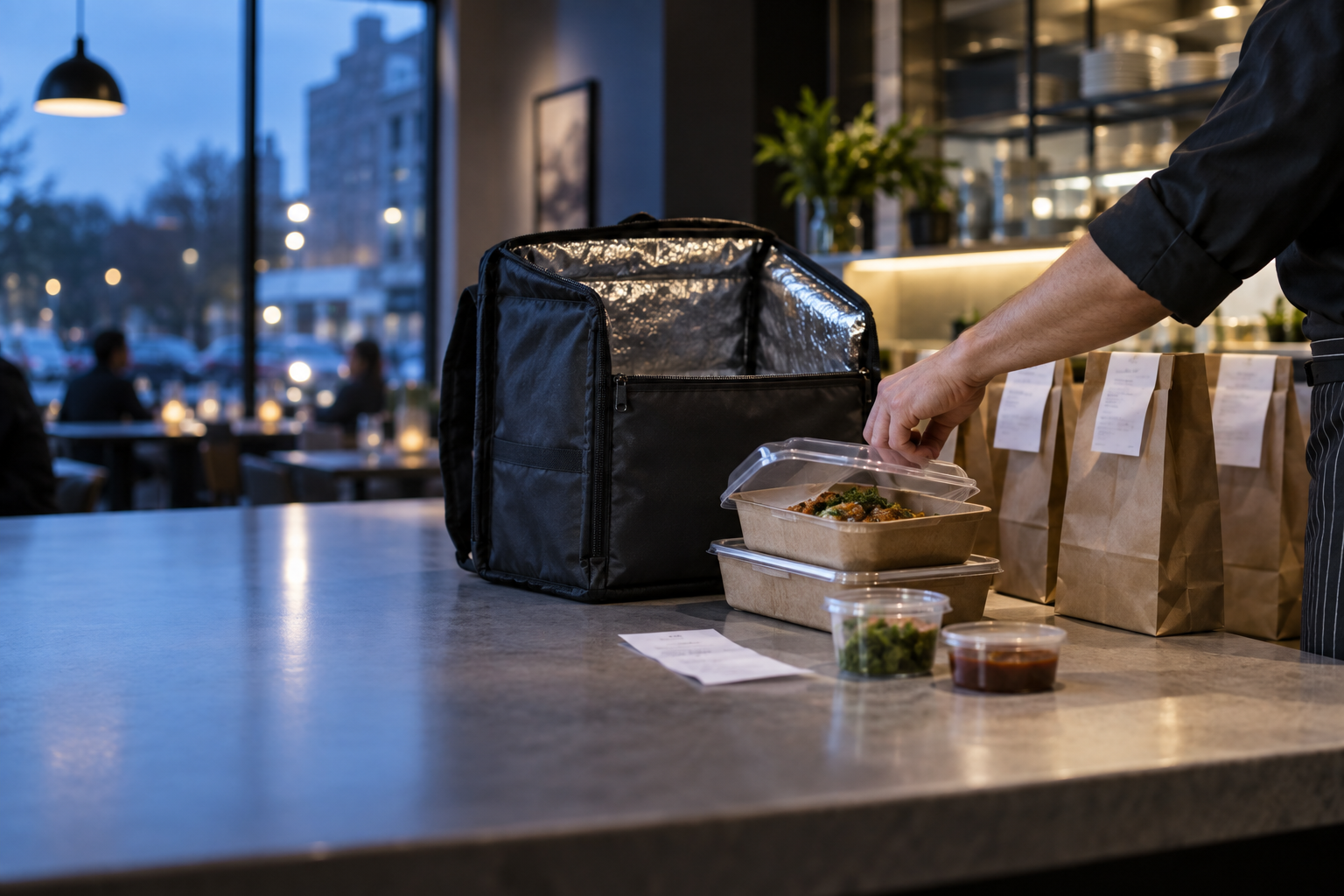
What an error actually costs
Four cost layers stack up behind a single bad order:
Track the first three in dollars. Treat the fourth as the reason you spend twenty minutes a week on prevention.
- Remake food cost: the ingredients of the replacement, plus any packaging it needs.
- Refunded or discounted sale: the revenue you do not collect.
- Commission on refunded orders: platforms do not always reverse their fee; check your statements.
- Reputation drag: the customer who does not reorder. This one is invisible in the P&L, which is exactly why it gets ignored.
Set up a log that survives a busy Friday
The log can be a shared note, a spreadsheet tab or a column on the closing checklist. It needs six fields and nothing else:
Nothing else. A log that takes more than a minute per entry does not get filled in during a rush, and an empty log is worse than no log because it hides the problem.
- Date and order ID.
- Cause: missing item, wrong item, quality or temperature, packaging failure, spilled or damaged in transit, courier delivery issue.
- Responsible party: restaurant or courier, with the evidence for the call.
- Cost type: refund, partial refund, remake, credit, no cost.
- Dollar amount.
- Owner of the fix.
Worked week: 2.3 errors per 100 orders
The figures below are illustrative.
| Cause | Errors | Cost | Responsible |
|---|---|---|---|
| Missing item | 6 | $104 | Restaurant |
| Temperature or quality complaint | 4 | $86 | Restaurant (holding/pack) |
| Wrong item | 2 | $41 | Restaurant |
| Packaging failure, leaked | 1 | $28 | Restaurant |
| Courier issue (late, mishandled) | 1 | $0 refunded | Courier |
| Total | 14 | $259 |
Out of 620 delivery orders in the week, that is 2.3 errors per 100 orders. Against delivery net sales of roughly $17,800, the logged error cost is about 1.5% of channel revenue. Add the unrecorded value of the customers who did not reorder and the real figure is higher.
The distribution is the useful part: ten of the fourteen errors are restaurant-caused, and most of those are packed at the counter, not cooked on the line. That tells you where the fix belongs.
Fix causes, not symptoms
Each cause has a specific countermeasure. A generic "be more careful" briefing changes nothing.
Assign one owner per cause and give it a review week. If the count does not move in two weeks, the countermeasure was wrong.
- Missing items: a four-point check against the printed items before sealing, done by the person who seals, initialled on the ticket. The sealer owns the count.
- Wrong items: separate bagging for orders with similar items, and a color or number tag per bag instead of describing contents aloud.
- Temperature and quality: hold hot and cold items separately, seal only at the moment of handoff, and record the handoff time so a complaint can be traced to hold time or to transit.
- Packaging failure: switch specs for the two or three items that leak most often, and stop overfilling containers to save a lid.
- Courier issues: keep the handoff photo and the ready time so the platform dispute is based on evidence rather than on frustration.
Review twenty minutes a week
A short weekly review keeps the number moving:
1. Add the week's entries, count errors and total the dollars. 2. Report errors per 100 orders and error cost as a percentage of delivery net sales. 3. Compare to the last four weeks; flag any cause that is trending up. 4. Check the fixes from last week, and close them or change them. 5. Pick one cause for the coming week and write the owner's name next to it.
If you also track channel margin, keep this review beside it. Packaging and commission are the structural costs of delivery; error cost is the operational one, and unlike commission it responds to training and process within a week. Our profit margin calculator can hold the channel numbers while you work on the error rate.
Keep the accountability fair
The fastest way to kill a useful log is to punish the people who fill it in. Two rules keep it healthy:
Teams report honestly when the log is used to change packaging, timing and process rather than to assign blame at the next shift meeting.
- No names on entries. The log records causes, not culprits. Discipline comes from the process, not the paperwork.
- Separate restaurant and courier causes with evidence. A leaking container is yours; a bag that never left the restaurant intact but arrived crushed is not. Fair attribution protects both the team and your dispute record.
Limitations and assumptions
- Platform reporting varies. Some platforms show refund reasons and photos, others show only a dollar amount, so your cause classification may be partial.
- Courier-caused errors are sometimes refunded by the platform without telling you. Do not credit yourself with a fix you did not make, and do not assign blame you cannot see.
- The lost-customer cost is real but not measurable from your P&L. Treat any figure you attach to it as an estimate, not an accounting number.
- Small weeks produce noisy rates: one bad Friday can double the weekly count. Compare four-week rolling averages before drawing conclusions.
- This log measures delivery errors. Dine-in complaints, comps and voids need their own review, and mixing them dilutes both.
FAQ
What is a reasonable delivery error rate?
There is no universal target, but the useful reference is your own four-week rolling average. A healthy operation usually knows its number to one decimal place and keeps it stable or falling. Once you track it, a first goal is a visible reduction in the leading cause rather than a specific industry figure.
Should refunds from courier mistakes count in my error cost?
Track them, but in a separate line. Restaurant-caused errors are the ones your process can fix, so mixing courier failures into the same number makes your own performance unreadable and discourages the team from logging anything at all.
Who should own the delivery error log?
The person who runs the pass or the packing station during peak, with a manager reviewing weekly. The log has to be filled at the point where errors happen, and the weekly review needs the authority to change packaging, holding or menu specs.
How do I stop one bad order from becoming a lost customer?
Recover it in the channel where the mistake happened: a replacement on the next order, a credit, or a short message that takes responsibility without excuses. The log tells you which causes are producing repeat complaints, so recovery spending goes where it matters.
Next step
Run your menu numbers before changing prices. Use the free calculator, then turn the best opportunities into a weekly margin routine.
Open the calculator